
Personal Branding vs Business Branding — Understanding the Difference
Introduction
In today’s digital economy, branding has become one of the most powerful assets for growth, visibility, trust, and influence. Whether you are an entrepreneur, startup founder, consultant, professional, coach, SME owner, or enterprise leader — your brand determines how people perceive you and your business.
However, many people often confuse:
- Personal Branding
and - Business Branding
While both are connected, they serve different purposes, audiences, and growth strategies.
A strong personal brand can create influence, authority, and trust around an individual.
A strong business brand creates scalability, systems, market positioning, and long-term organizational value.
Modern businesses need both.
At Rigital Ecosystem, we believe that combining Personal Branding and Business Branding strategically creates a powerful digital growth ecosystem.
This article explores:
- What Personal Branding means
- What Business Branding means
- Major differences between them
- Benefits of each
- Challenges businesses face
- How they work together
- Why modern entrepreneurs need both
What is Personal Branding?
Personal Branding is the process of creating, positioning, and promoting an individual’s identity, expertise, reputation, values, personality, and authority in the marketplace.
It focuses on:
- The person behind the business
- Individual expertise
- Leadership presence
- Professional reputation
- Thought leadership
- Personal influence
In simple words:
Personal Branding is how people perceive you as an individual.
A personal brand reflects:
- Your story
- Your vision
- Your expertise
- Your values
- Your communication style
- Your online presence
- Your reputation
Examples of strong personal brands include:
- Entrepreneurs
- Industry experts
- Coaches
- Consultants
- Speakers
- Authors
- Influencers
- Thought leaders
- CXOs
People connect emotionally with people before companies.
That is why personal branding has become extremely important in the digital era.
What is Business Branding?
Business Branding is the process of creating a unique identity, positioning, image, and perception for a company or organization.
It focuses on:
- The business entity
- Products and services
- Customer experience
- Brand positioning
- Market differentiation
- Organizational identity
In simple words:
Business Branding is how people perceive your company.
Business branding includes:
- Company logo
- Brand identity
- Brand voice
- Visual design
- Brand messaging
- Website
- Marketing campaigns
- Customer experience
- Reputation
- Product perception
A strong business brand helps organizations:
- Build recognition
- Create trust
- Attract customers
- Expand markets
- Scale operations
- Increase valuation
Business branding creates long-term organizational value beyond individuals.
Why Branding Matters in the Digital Era
The internet has changed customer behavior dramatically.
Today, customers:
- Search online first
- Compare businesses digitally
- Follow industry leaders
- Consume content regularly
- Trust visible brands
- Connect emotionally with stories
This means:
- People buy from trusted individuals
- Customers choose recognizable brands
- Visibility creates opportunities
- Authority drives influence
Branding is no longer optional.
It is a business necessity.
Personal Branding vs Business Branding — The Core Difference
The biggest difference is:
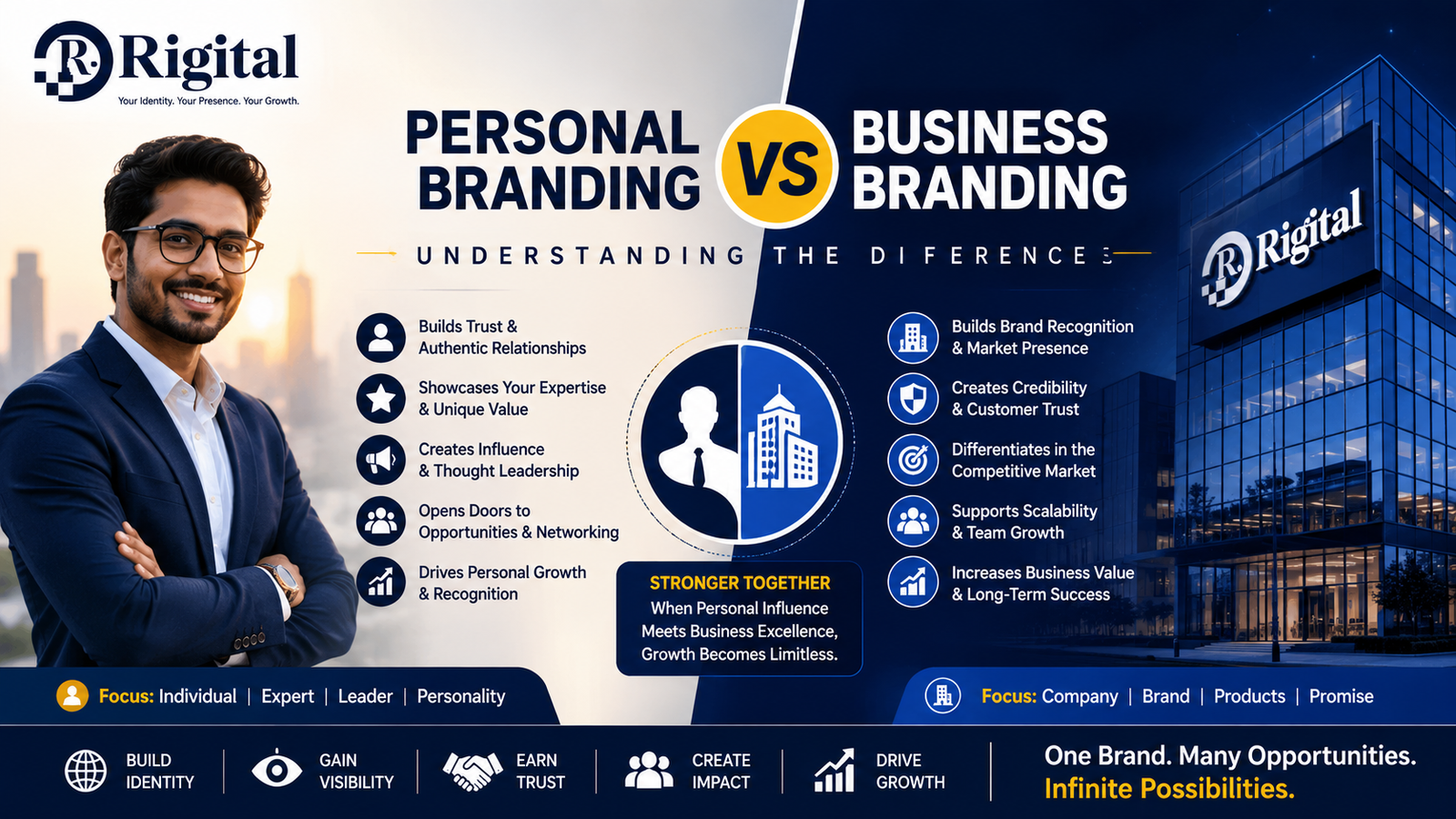
Personal Branding focuses on the Individual.
Business Branding focuses on the Organization.
While personal branding builds influence around a person, business branding builds trust around a company.
Both are important — but they serve different strategic purposes.
Detailed Comparison Between Personal Branding and Business Branding
| Personal Branding | Business Branding |
|---|---|
| Focuses on the individual | Focuses on the company |
| Builds personal authority | Builds organizational credibility |
| Human-centric approach | Company-centric approach |
| Driven by personality | Driven by business identity |
| Emotional connection is stronger | Market positioning is stronger |
| Easier to build trust quickly | Easier to scale operations |
| Depends on individual reputation | Depends on company systems |
| Great for networking | Great for scalability |
| Content revolves around expertise | Content revolves around products/services |
| Flexible and adaptable | Structured and system-driven |
Why Personal Branding is Important
1. Builds Trust Faster
People trust people more easily than companies.
When entrepreneurs share:
- Stories
- Experiences
- Insights
- Knowledge
- Leadership perspectives
they build emotional connections with audiences.
Trust accelerates business growth.
2. Creates Industry Authority
Strong personal brands position individuals as:
- Experts
- Thought leaders
- Influencers
- Visionaries
Authority attracts:
- Opportunities
- Partnerships
- Speaking engagements
- Media visibility
- Business growth
3. Enhances Networking Opportunities
People prefer connecting with real personalities.
Personal branding improves:
- Professional relationships
- Networking opportunities
- Collaborations
- Community building
Strong networks create business opportunities.
4. Supports Business Growth
A founder’s reputation often influences company success.
Strong founder branding helps:
- Attract customers
- Build investor confidence
- Increase visibility
- Improve marketing effectiveness
Founder visibility often accelerates startup growth.
5. Creates Long-Term Influence
Personal brands can outlive businesses.
Industry leaders continue influencing markets through:
- Content
- Leadership
- Expertise
- Vision
- Communities
Influence creates sustainable value.
Why Business Branding is Important
1. Builds Company Recognition
Business branding helps customers recognize:
- Products
- Services
- Visual identity
- Brand positioning
Recognition improves customer recall.
2. Creates Market Differentiation
Strong branding helps businesses stand out from competitors.
It creates:
- Unique identity
- Competitive positioning
- Brand personality
- Customer perception
Differentiation increases market value.
3. Improves Scalability
Business branding creates systems that can scale beyond individuals.
Organizations can:
- Expand teams
- Open branches
- Launch products
- Enter new markets
Scalability is essential for long-term growth.
4. Builds Organizational Trust
Strong business brands create:
- Professional perception
- Customer confidence
- Market stability
- Corporate reputation
Customers feel safer buying from recognizable brands.
5. Increases Business Valuation
Businesses with strong brands often achieve:
- Higher market value
- Better customer loyalty
- Stronger retention
- Greater investor confidence
Brand equity becomes a valuable asset.
Challenges of Personal Branding
While personal branding is powerful, it also has limitations.
Dependency on the Individual
The brand revolves around one person.
Difficult to Scale Alone
Growth may depend heavily on the founder’s involvement.
Reputation Risks
Personal controversies can impact business reputation.
Burnout Risks
Constant visibility and content creation can become overwhelming.
Challenges of Business Branding
Business branding also has challenges.
Slower Emotional Connection
People connect faster with humans than companies.
Higher Marketing Costs
Building business awareness requires larger investments.
Complex Communication
Maintaining consistency across teams can be difficult.
Longer Trust-Building Process
Business credibility often takes more time to establish.
Which is More Important — Personal Branding or Business Branding?
The answer is:
Both are important.
In modern business ecosystems:
- Personal Branding builds trust
- Business Branding builds scalability
The most successful businesses combine both strategically.
How Personal Branding and Business Branding Work Together
The strongest businesses integrate:
- Founder visibility
- Corporate branding
- Content marketing
- Thought leadership
- Brand storytelling
- Community building
For example:
- The founder creates authority
- The company creates systems
- The founder attracts attention
- The company delivers value
- The founder builds trust
- The business scales operations
This combination creates exponential growth opportunities.
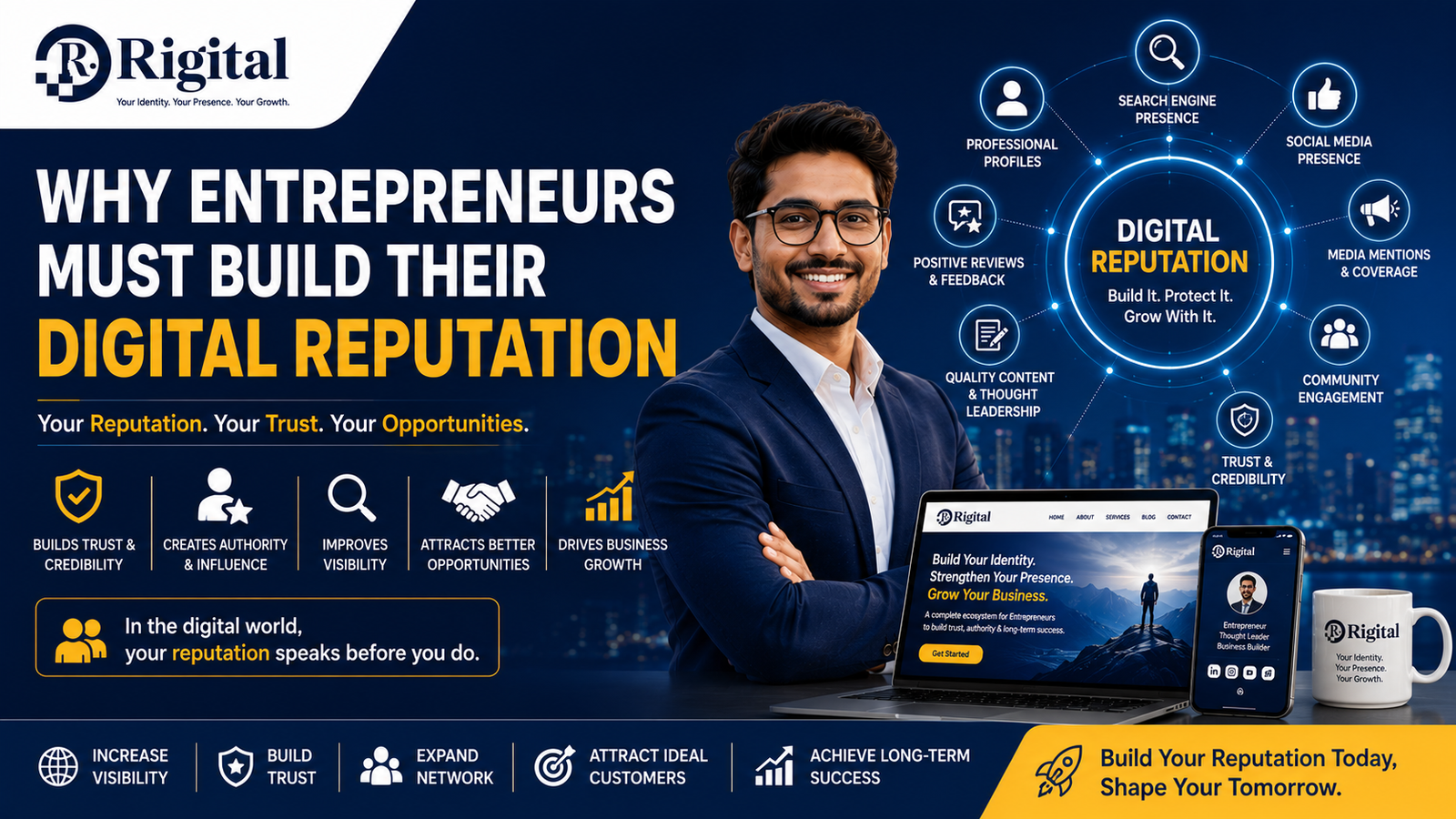
Why Entrepreneurs Need Both Brands
Modern entrepreneurship is driven by visibility.
Customers want to know:
- Who is behind the business
- What the company stands for
- Why they should trust the brand
Entrepreneurs who build both:
- Personal credibility
and - Business authority
gain major competitive advantages.
They can:
- Build communities
- Attract partnerships
- Generate leads
- Expand influence
- Create stronger ecosystems
The Role of Digital Platforms in Branding
Digital platforms have transformed branding completely.
Today, branding happens through:
- Websites
- YouTube
- Blogs
- Podcasts
- Online communities
- Search engines
- Media platforms
Visibility creates influence.
Consistency creates trust.
Content creates authority.
How Rigital Ecosystem Supports Personal and Business Branding
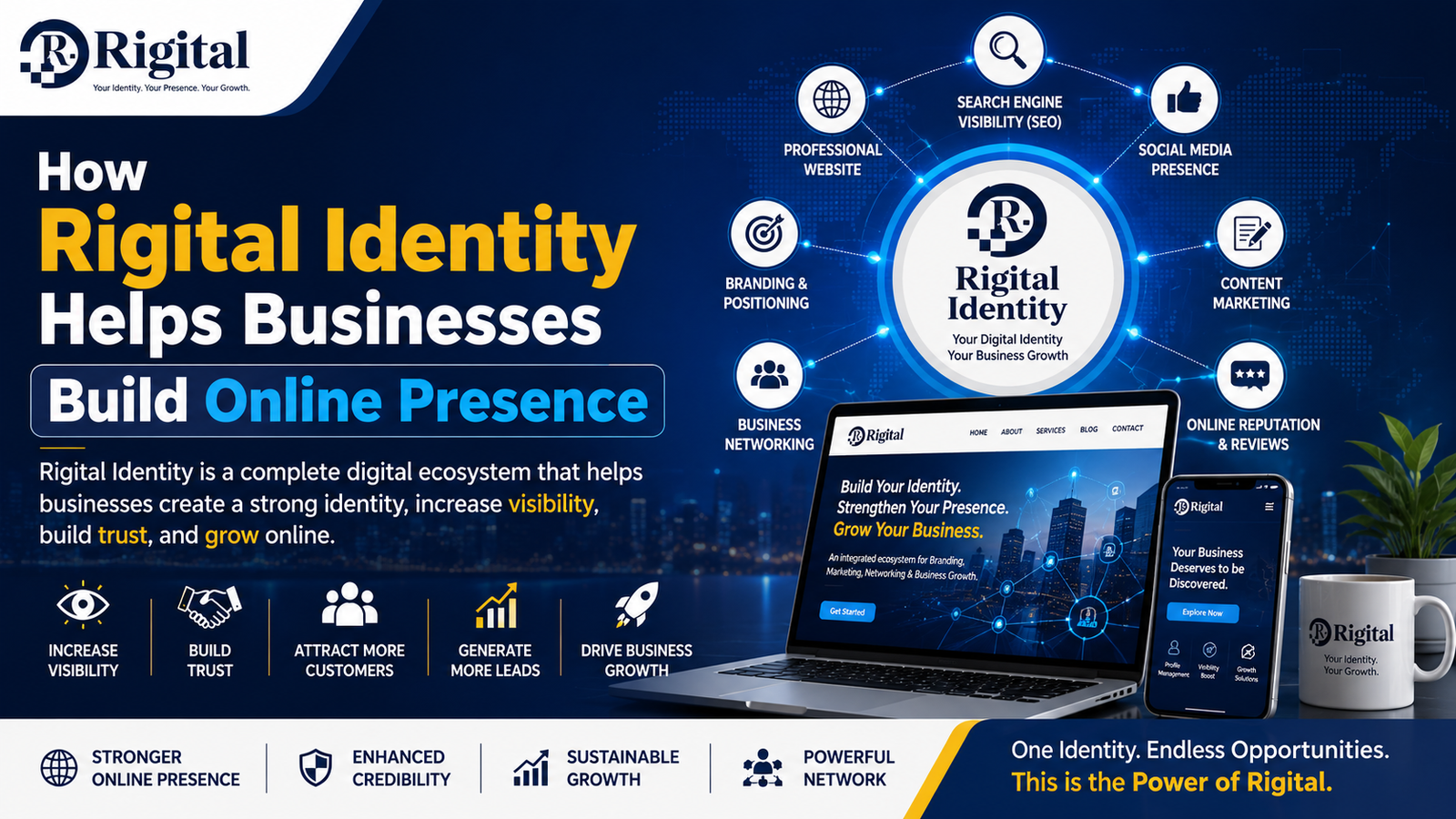
Rigital Ecosystem helps entrepreneurs, professionals, startups, SMEs, and enterprises build both Personal Branding and Business Branding through an integrated digital ecosystem.
Rigital supports:
- Digital Identity Creation
- Professional Profiles
- Business Branding
- Website Development
- Content Marketing
- Media Visibility
- SEO Optimization
- Social Media Presence
- Thought Leadership
- Networking Communities
- Brand Storytelling
- Digital Marketing
The goal is to help businesses and professionals:
- Increase visibility
- Build trust
- Create authority
- Strengthen online presence
- Grow sustainably
Rigital believes branding is not just about logos.
It is about creating meaningful digital identity and long-term influence.
The Future of Branding
The future of branding will be driven by:
- Authenticity
- Personalization
- AI-powered engagement
- Community-led growth
- Content ecosystems
- Digital trust
- Human connection
- Thought leadership
Businesses that combine:
- Human influence
and - Strong organizational branding
will dominate future markets.
Branding will become:
- More relationship-driven
- More content-focused
- More personalized
- More community-oriented
Key Takeaways
Personal Branding
Focuses on:
- Individual identity
- Expertise
- Leadership
- Influence
- Trust
Business Branding
Focuses on:
- Company identity
- Market positioning
- Scalability
- Recognition
- Organizational growth
Together
They create:
- Stronger credibility
- Better visibility
- Greater influence
- Sustainable business growth
Conclusion
In today’s digital economy, branding is one of the most powerful growth assets for individuals and businesses.
Personal Branding helps build:
- Trust
- Influence
- Authority
- Emotional connection
Business Branding helps create:
- Recognition
- Scalability
- Organizational credibility
- Long-term business value
The most successful entrepreneurs and businesses combine both strategically.
A founder’s personal brand attracts attention.
A company’s business brand builds scalable systems and sustainable growth.
Rigital Ecosystem empowers businesses and professionals to build strong digital identity, branding, visibility, and authority through integrated branding, marketing, networking, media, and technology solutions.
The future belongs to brands that are:
- Authentic
- Visible
- Trustworthy
- Human-centered
- Digitally empowered
Building both Personal Branding and Business Branding is no longer optional.
It is essential for long-term success in the digital era.
About Rigital Ecosystem
Rigital Ecosystem is a Digital Business Ecosystem focused on Digital Identity, Branding, Media, Marketing, Networking, Technology, and Business Growth Solutions for Entrepreneurs, Startups, SMEs, MSMEs, Professionals, and Enterprises.